
A standardisation layer for interoperable spatial data

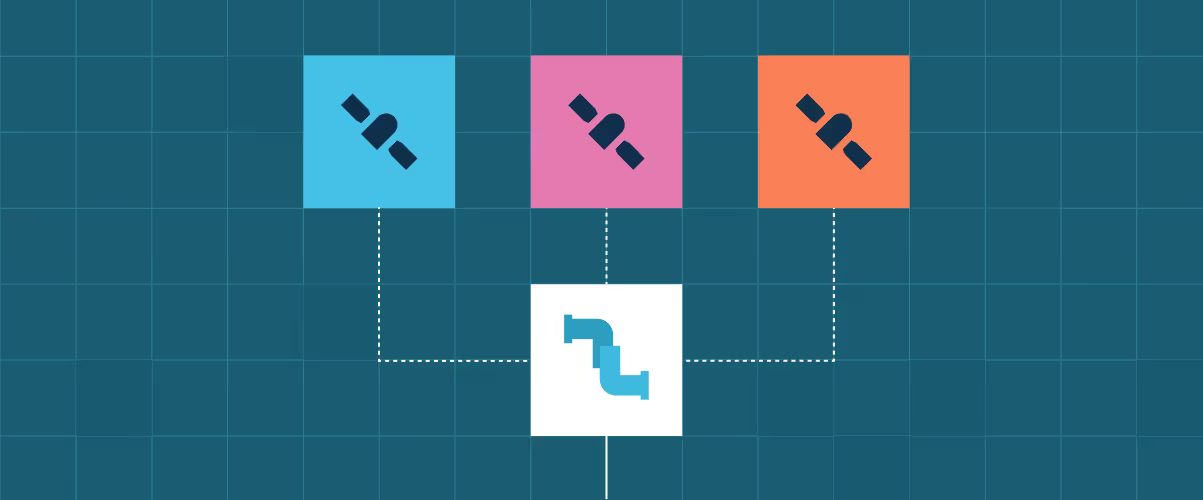
Standardise raw imagery and derived products into consistent, cloud-native formats. Enabling teams and downstream systems to operate on reliable, analysis-ready inputs.

A single system for interoperable, analysis-ready data

Replace format inconsistencies and manual preparation with automated normalisation.

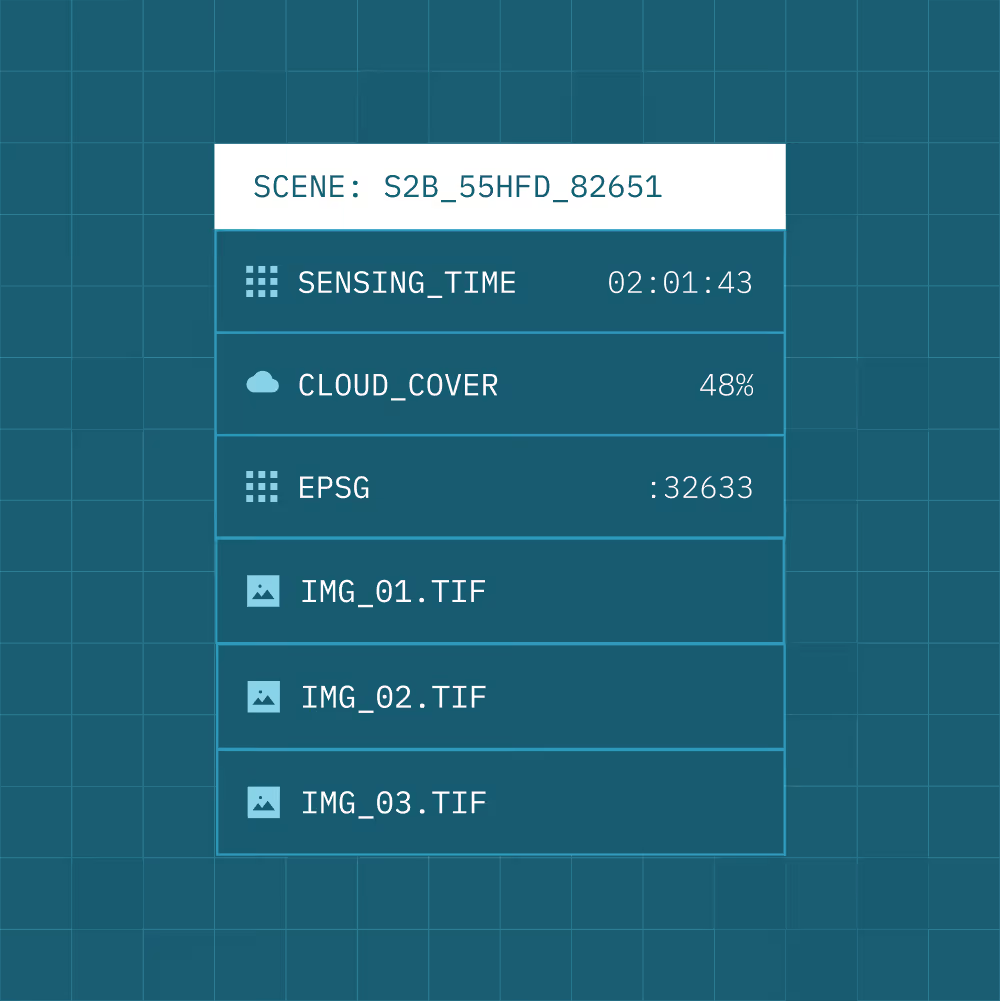
STAC-based structure

Normalise imagery into a consistent, standards-based catalogue.

Cloud Optimised GeoTIFF (COG)

Handle execution order and interdependencies across processing steps.

Quality layers and annotations

Generate and standardise metadata as part of ingestion.

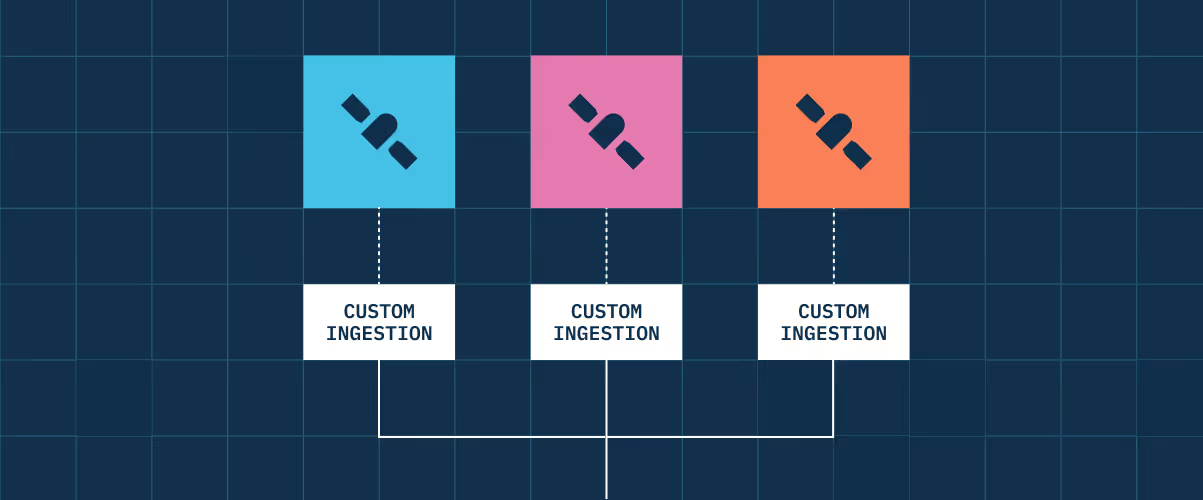
Consistent structure across providers

Eliminate format and schema inconsistencies between sensors and suppliers.

Analysis-ready outputs

Ensure data is ready for analytics and automation pipelines on ingestion.

Accelerated onboarding

Integrate new sensors and missions without custom restructuring.

How it works in practice

Turn fragmented data into standardised infrastructure.

Ingest

Raw imagery and data enter the normalisation layer upon acquisition.

Standardise

Imagery is converted into a consistent STAC-based structure, with raster data automatically transformed into COG.

Enrich

Quality layers and annotations are generated and standardised as part of the normalisation process.

Deliver

Downstream analytics and machine learning pipelines receive reliable, comparable, cloud-native inputs.

Built with your requirements in mind

✓ Enterprise grade security
✓ Audit ready by design
✓ API first architecture
✓ Modular by design
✓ Vendor neutral infrastructure
✓ Public or private cloud
✓ Standards based interoperability
✓ Granular access control
✓ Licensing aware
✓ Enterprise grade security
✓ Audit ready by design
✓ API first architecture
✓ Modular by design
✓ Vendor neutral infrastructure
✓ Public or private cloud
✓ Standards based interoperability
✓ Granular access control
✓ Licensing aware

Built for structure and scale

Inconsistent formats and metadata create friction between sensors, suppliers, and analytics tools.

Data Normalisation enforces consistent structure, formats, and quality controls at ingestion — enabling organisations to operate at scale without rebuilding pipelines for every new source.

Cloud-native by default

Optimised for performance in cloud and hybrid environments.

Reduced integration overhead

No custom restructuring for each provider.

Reliable analytics inputs

Standardised formats for AI and machine learning workflows.

Faster sensor onboarding

Integrate new missions without rearchitecting systems.

Live and maintained in weeks, not months

Adopt standardisation without rebuilding your analytics stack.

Build it yourself

Average 9 months

Month 0–3

Write custom converters for one provider.

Month 3–6

Extend schema handling for additional sensors.

Ongoing Maintenance

Maintain format mappings and metadata fixes.

High internal cost. Long time to value. Permanent operational burden.

With Automation Workflows

Average 4 weeks

Week 0-4

Deploy automated STAC and COG conversion layer.

Live with Light Maintenance

Operate on standardised, analysis-ready inputs.

Week 4+

Onboard new providers through a consistent structure.

Live in weeks. No internal build. No long-term maintenance load.

Let’s talk about how you run EO today

Most conversations start with understanding your current systems, workflows and constraints to see how Arlula can empower your team.